
Paper currency collecting offers something different — deeper history, stronger visual detail, and no need to chase key dates to build something meaningful. But notes are less forgiving than coins: grading is stricter, damage is permanent, and tracking is more complex. Here's how to approach U.S. paper money the right way.
If you’ve spent most of your time collecting coins, paper currency collecting can feel like a completely different game. The grading is stricter, the materials are fragile, and the margin for error is smaller.
But for many collectors, U.S. paper money ends up being one of the most rewarding areas in the hobby.
Whether you're just getting started or already holding a few graded notes, understanding how to approach paper currency—and how to stay organized—makes all the difference.
Paper currency collecting focuses on U.S. banknotes issued across different eras of American history.
That includes:
Unlike coins, even minor imperfections can have a noticeable impact on value. A single fold or handling mark can mean the difference between two grades—and two very different price points.
At some point, many collectors start looking beyond coins. Not because coins lose appeal—but because paper money offers something different.
U.S. notes reflect specific moments—banking systems, economic shifts, and policy changes. A National Bank Note ties directly to a town. A Silver Certificate represents a different monetary system entirely.
You don’t need to hunt down ultra-rare keys to build a meaningful collection. Type sets, star notes, and district runs offer depth without requiring huge capital.
From intricate engravings to seals and serial numbers, paper currency gives you more to study—and more to appreciate.
The biggest mistake new collectors make is trying to collect everything.
Keep it focused.
A few solid starting points:
You can always expand later. Early focus keeps your collection intentional instead of scattered.
Grading matters more with notes than most collectors expect.
The difference between PMG 64 and PMG 65 isn’t just technical—it’s financial.
You need to pay attention to:
If you’re still learning, graded notes from PMG or PCGS Currency are the safest place to start.
Paper currency is not forgiving.
A few common mistakes:
Once damage happens, you don’t get a second chance.
Use proper sleeves or graded holders—and just as important—keep track of where everything is stored.
Spreadsheets are usually where collectors start.
They’re also where things start to break.
You end up dealing with:
Paper currency adds complexity—serial numbers, Friedberg numbers, signatures, and condition notes all need to be tracked correctly.
At some point, a spreadsheet just becomes extra work.
Paper currency isn’t treated like a side feature—it’s fully integrated into how you manage your collection.
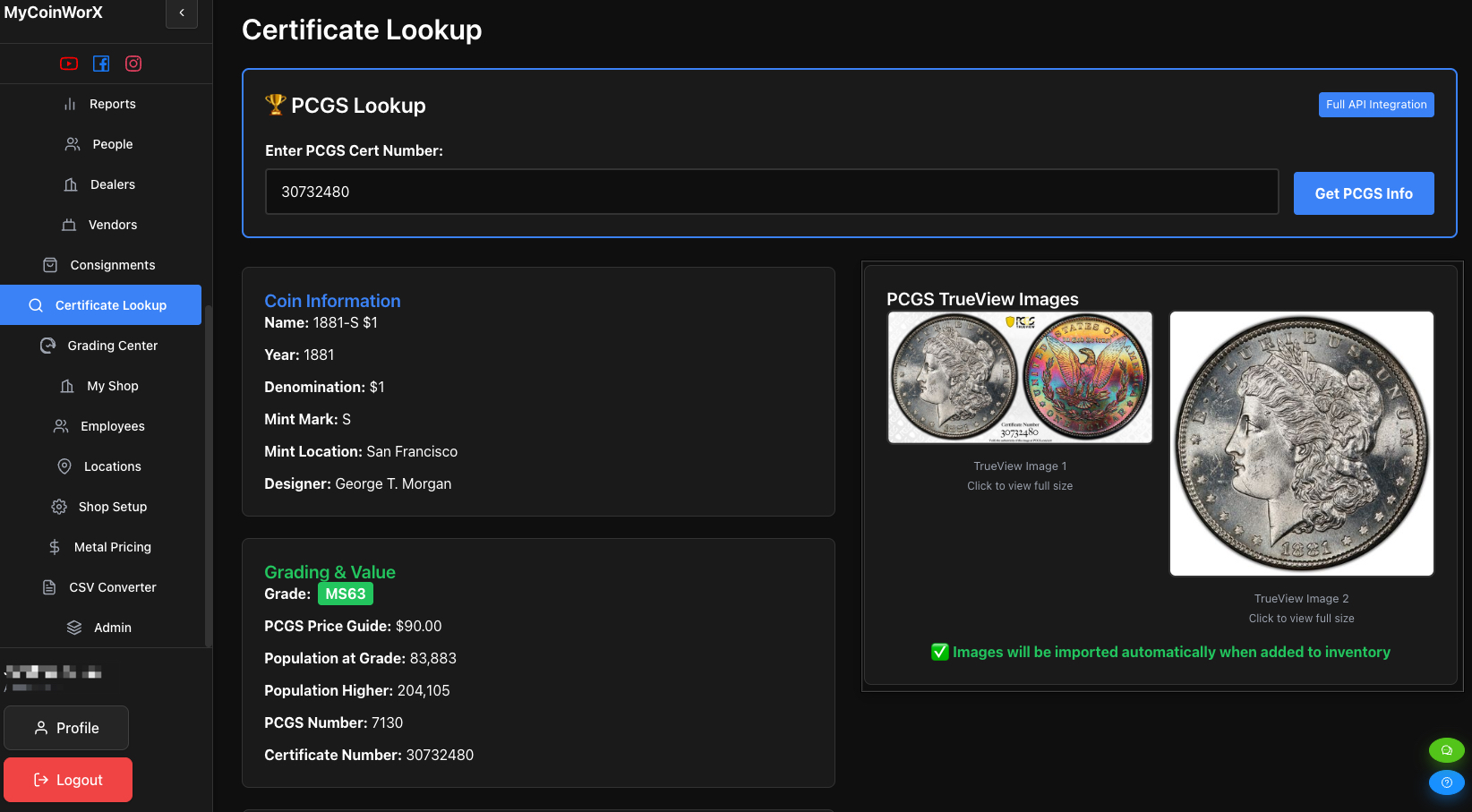
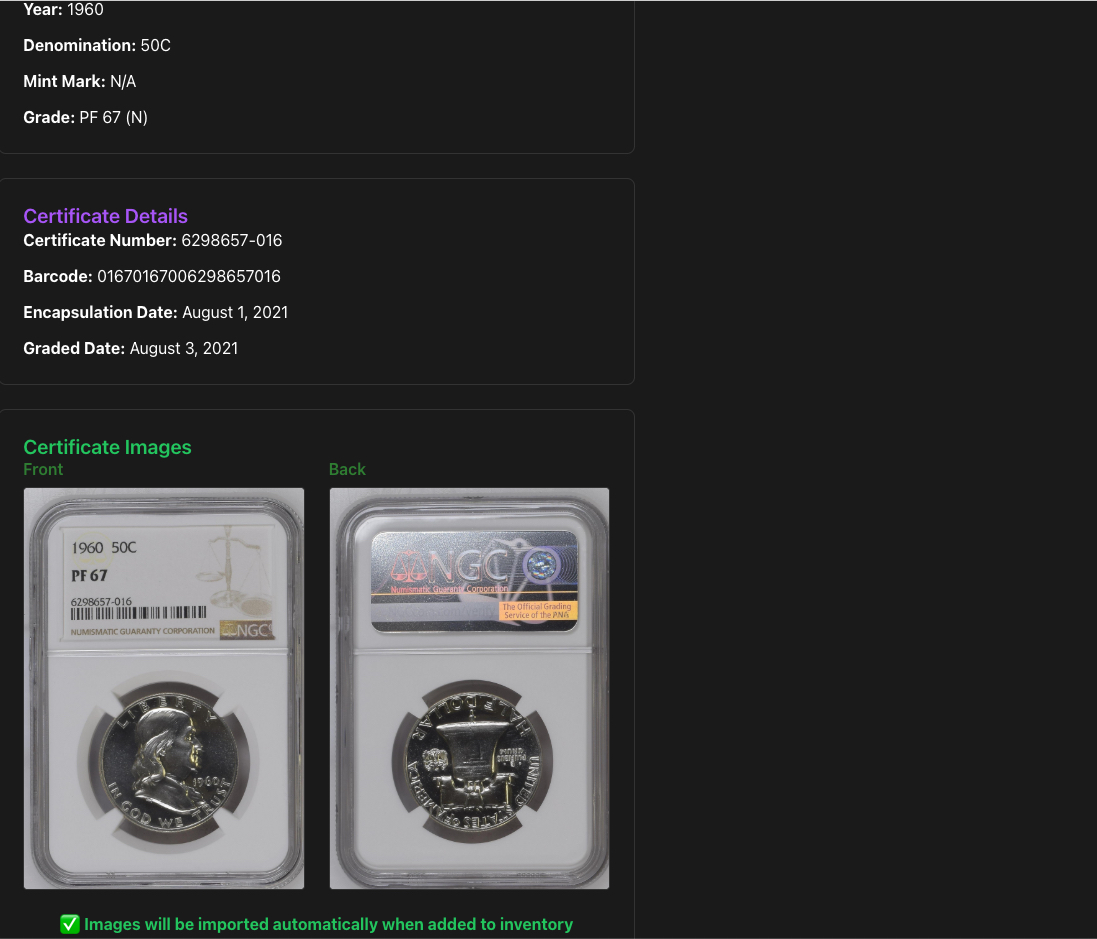
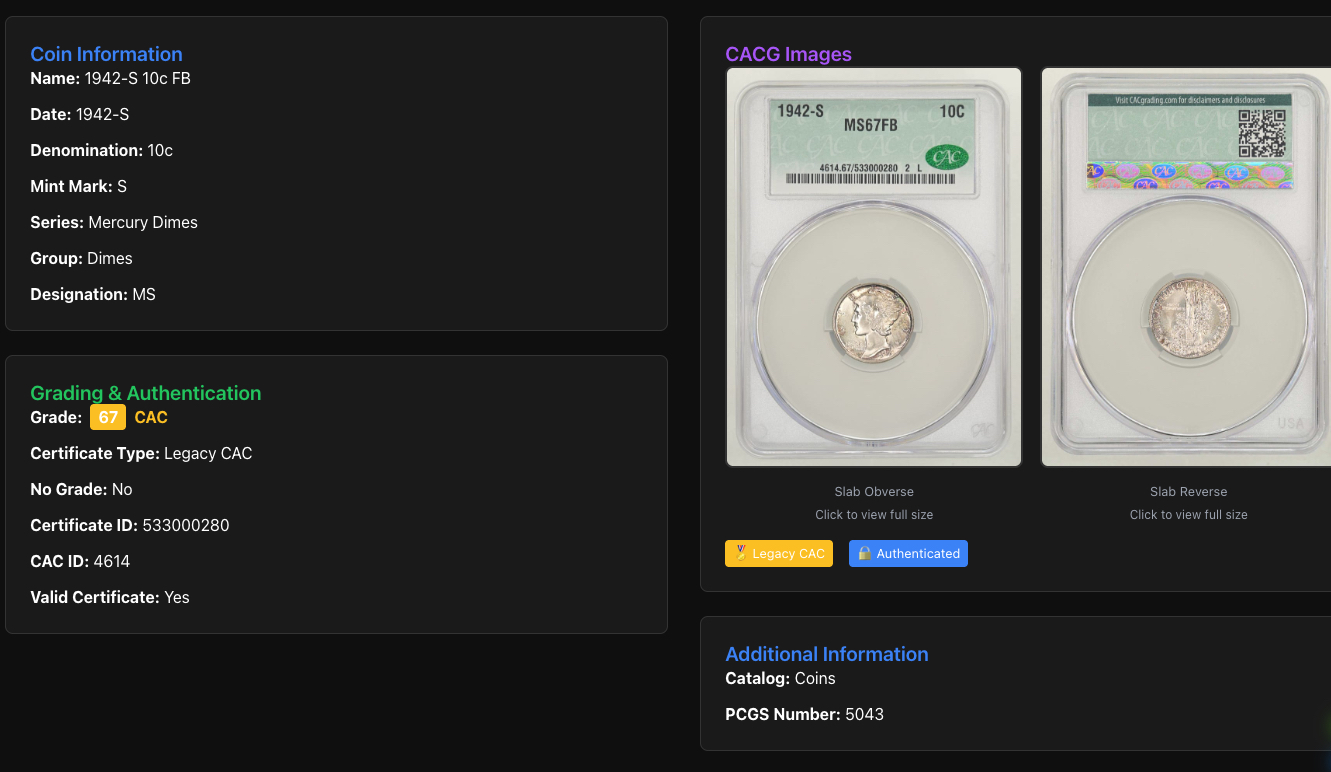
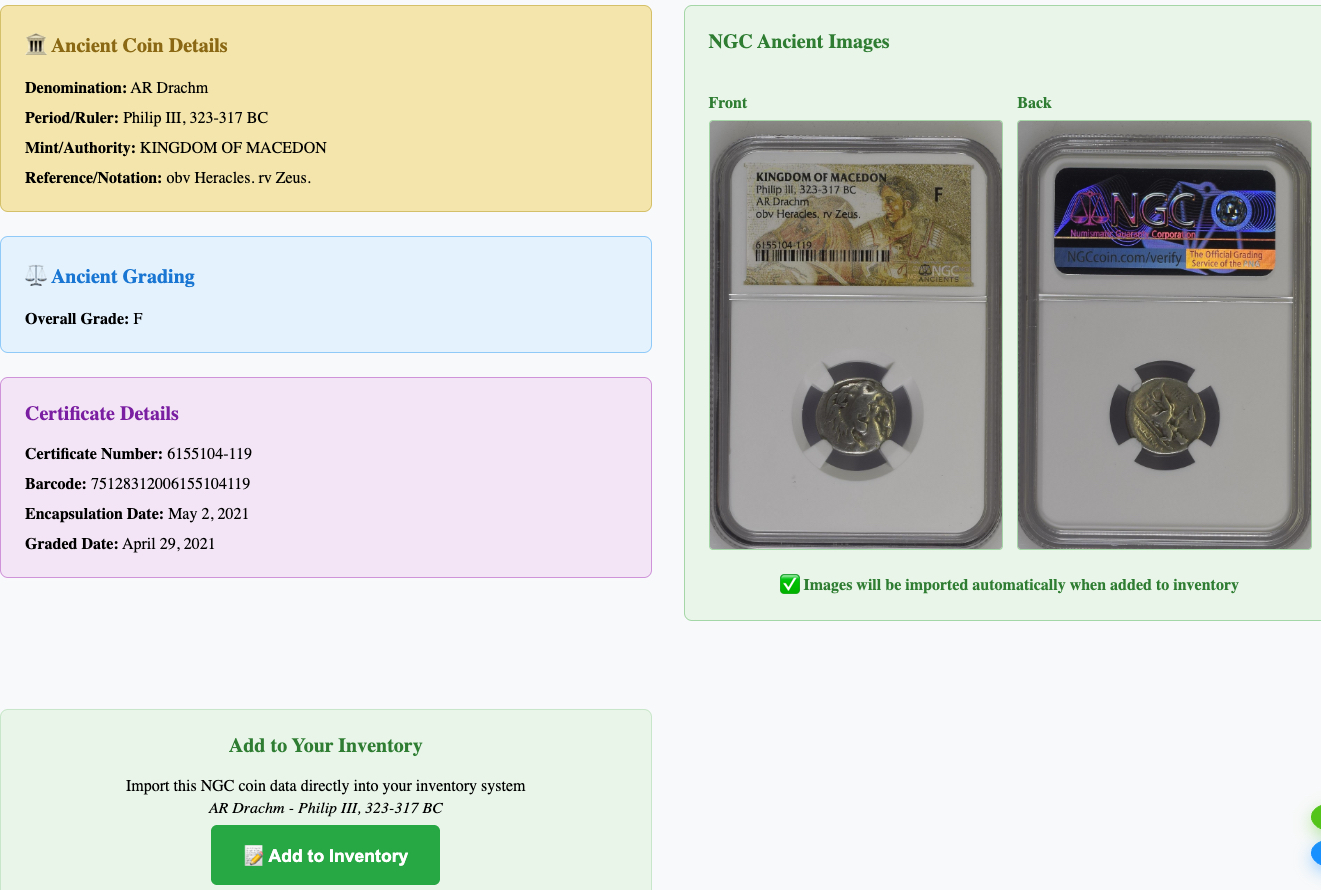
Pull in note details directly using certification numbers, including images when available.
No manual typing. No guesswork.
Track:
Everything stays consistent—and searchable.
Attach high-quality images to each note so you can actually see your collection, not just list it.
At a show or shop, you can instantly check if you already own a note—or what you paid for it.
Run audits to confirm what’s in your collection versus what’s recorded.
That’s something most collectors don’t think about—until something doesn’t add up.
Even experienced coin collectors run into these when they start working with notes.
Photos don’t always show folds, repairs, or pressing.
Environmental damage happens faster than most expect.
Not every cool note holds long-term value.
This becomes a problem when you try to sell, insure, or even just understand your collection.
Paper currency collecting isn’t more complicated than coins—but it does require more precision.
Better handling. Better grading awareness. Better organization.
If you’re still trying to manage notes in a spreadsheet, you’ve probably already run into the limits:
At some point, it stops being efficient.
If you want your collection to stay organized, accessible, and easy to grow, it helps to use a system built specifically for collectors—not one you had to build yourself.
That’s exactly where MyCoinWorX fits.


© 2026 MyCoinWorx. All rights reserved. | Terms and Conditions Frederick, MD | Built by a Proud Coin Collector | Privacy and TOS
Design and Developed by 11thAgency